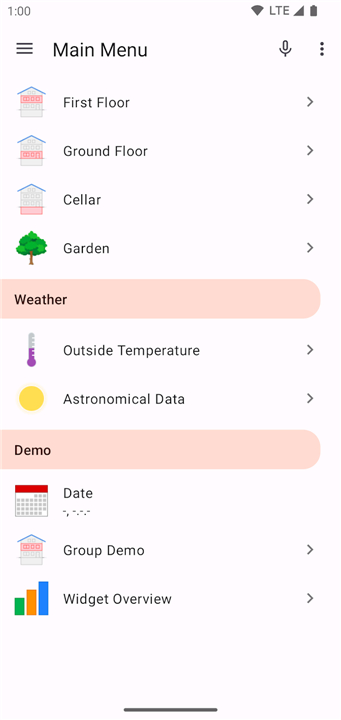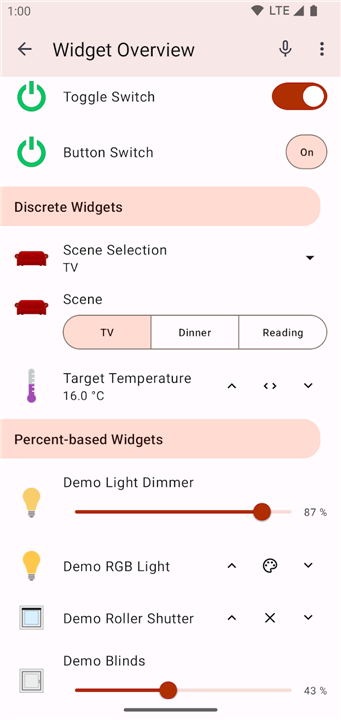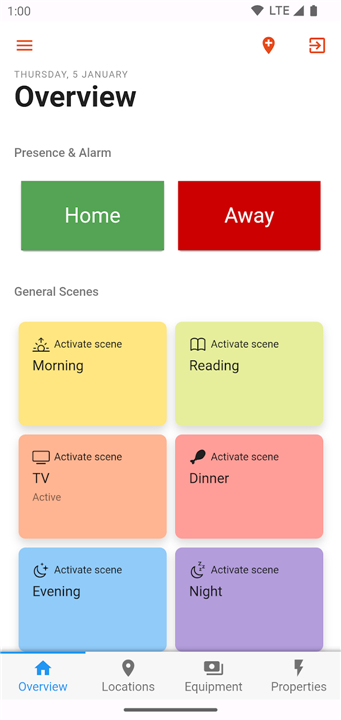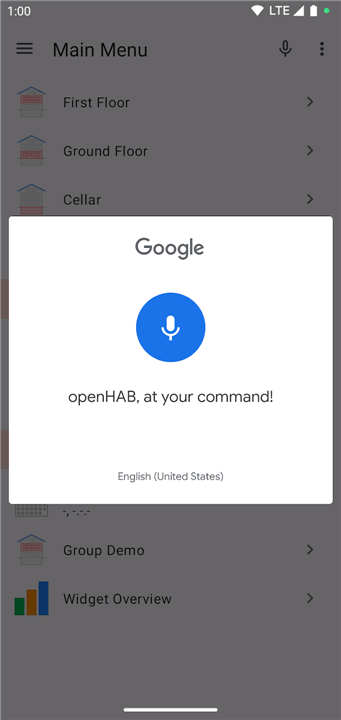



openHAB
Overview & Core Capabilities
• openHAB is a Java-based, open-source home automation platform designed around the vision of "empowering the smart home."
• Operating as a vendor and technology-agnostic solution, it integrates a vast range of smart home hardware and protocols into a single, cohesive system.
• Built on a unified abstraction layer, allowing all connected devices to seamlessly interact with overarching automation rule engines and user interfaces.
Supported Products & Integrations
• Features over 200 specialized add-ons to support diverse brands, devices, and communication standards.
• Compatible with popular platforms and protocols including Z-Wave, Philips Hue, Amazon Echo, Chromecast, and Sonos.
• Includes action plugins for third-party automation apps like Tasker and Locale.
• Full directory of supported hardware and integrations is accessible at: https://www.openhab.org/addons/
Community & Contribution
• Backed by an active open-source community with over 13,000 registered forum members providing guidance and inspiration (https://community.openhab.org).
• Issue reporting is available via the forum or GitHub repository (https://github.com/openhab/openhab-android/issues).
• App localization and translation efforts are hosted on Crowdin (https://crowdin.com/project/openhab-android).
The openHAB Foundation
• Supported by the openHAB Foundation e.V., a non-profit organization.
• Focused on educating the public regarding the advantages and applications of free, open-source smart home software.
• Additional mission details are available at: https://www.openhabfoundation.org
System Requirements
• Usage of the openHAB client app requires an established openHAB server installation.
FAQ
Q: How does the unified abstraction layer in openHAB work?
A: The abstraction layer translates the native commands and status reports of each device into a common internal representation called Items. This means that your automation rules, scripts, and user interfaces interact with Items rather than directly with the hardware, allowing you to change the underlying technology (e.g., swapping a Zigbee sensor for a Z‑Wave one) without rewriting your rules.
Q: What are the main components of an openHAB installation?
A: A typical setup consists of the openHAB runtime (the core engine that runs on a server or Raspberry Pi), one or more bindings (add‑ons that talk to specific hardware), Things (the configuration objects that represent physical devices), Items (the abstract data points used in rules and UIs), and the user interface options such as BasicUI, HABPanel, or the openHAB Android/iOS apps.
Q: How many bindings and add‑ons are available, and where can I find them?
A: The openHAB ecosystem offers more than 200 specialized bindings and add‑ons covering everything from lighting and climate control to entertainment systems and voice assistants. The complete, searchable directory is hosted at https://www.openhab.org/addons/ where you can browse by category, protocol, or vendor.
Version History
v3.21.1——26 Aug 2026
Vendor and technology agnostic open source home automation Download the latest version of openHAB to enjoy new features and updates immediately!
*3.21.1
Minor bug fixes and improvements. Install or update to the newest version to check it out!
*3.20.7
Minor bug fixes and improvements. Install or update to the newest version to check it out!
*3.20.6
Minor bug fixes and improvements. Install or update to the newest version to check it out!